Imagine stepping onto an aircraft, not as a passenger, but as a professional responsible for safety and service at 35,000 feet. That dream starts with a single, crucial step: enrolling in a cabin crew basic course. This is your golden ticket into the exciting world of aviation.
The airline industry is rebounding faster than ever, and carriers worldwide are on a hiring spree. But here’s the truth: airlines don’t just want friendly faces. They need highly trained professionals who can handle emergencies, provide exceptional service, and represent their brand with pride. A cabin crew basic course gives you exactly that foundation.
Whether you’re a recent graduate or considering a thrilling career change, this guide walks you through everything you need to know. We’ll cover what you learn, how much it costs, and how to choose the right school. Ready for takeoff?
What Exactly Is a Cabin Crew Basic Course?
Think of this course as your aviation boot camp. It’s an intensive training program approved by aviation authorities like those under the European Union Aviation Safety Agency. Successful completion leads to a Cabin Crew Attestation—your official license to work as a flight attendant.
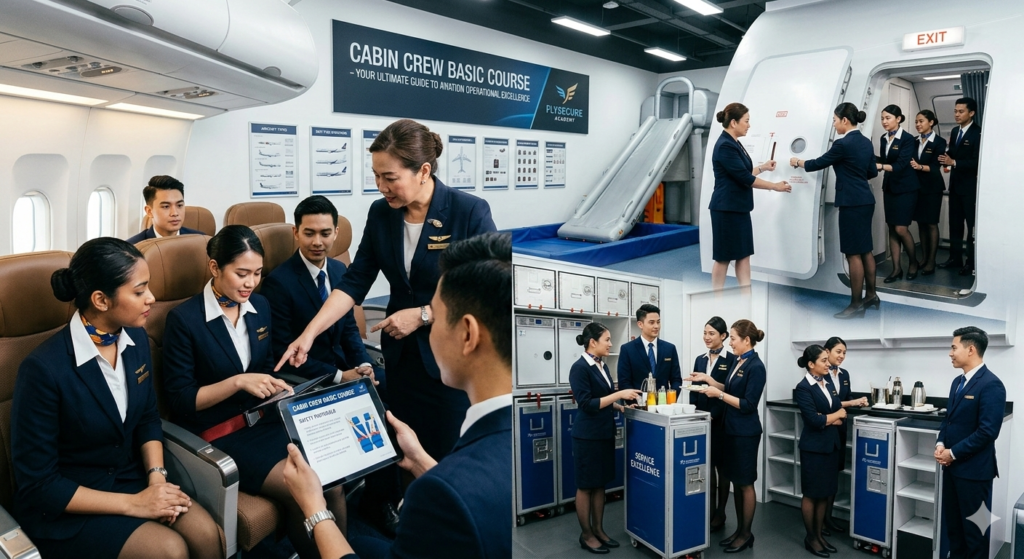
This isn’t just theory. You’ll spend hours in practical drills, mock cabin evacuations, and real-fire simulations. Airlines expect you to hit the ground running, and this training ensures you do exactly that.
What Will You Learn? Inside the Curriculum
The curriculum covers far more than serving drinks. Safety is the number one priority, and your training reflects that. Here’s a breakdown of what most programs include:
Theoretical Knowledge:
- Aviation Regulations: Understanding international safety standards
- Aircraft Ground School: Learning about different aircraft types, doors, and emergency equipment
- Meteorology: How weather affects flights and passenger safety
- Crew Resource Management: Working effectively as a team under pressure
- Dangerous Goods: Identifying and handling hazardous materials correctly
- Aviation First Aid: From CPR to dealing with in-flight medical emergencies
- Fire and Smoke Training: Understanding fire behavior and extinguisher use
Practical Skills:
- Fire Drills: Tackling real fire and smoke in controlled simulators
- Water Survival: Performing ditching procedures and swimming drills
- Evacuation Procedures: Commanding slides and managing passenger panic
- Door Drills: Operating aircraft doors manually and automatically
- Service Training: Grooming standards, meal service techniques, and conflict resolution
Most courses run between four to six weeks. Some academies offer intensive full-time programs, while others provide weekend options for those juggling work commitments.
How Much Does a Cabin Crew Basic Course Cost?
Let’s talk money. Investing in your future isn’t cheap, but the return on investment can be spectacular. Entry-level flight attendants at major Gulf carriers or European airlines often earn competitive salaries with tax-free benefits.
Typical cost breakdown:
| Course Type | Average Cost | Duration |
|---|---|---|
| Basic Attestation | $2,000 – $3,500 | 4-6 weeks |
| Premium Package (with uniform & exams) | $3,500 – $5,000 | 6-8 weeks |
| Integrated (with interview guarantee) | $5,000 – $7,000 | 8-12 weeks |
Some training centers offer payment plans. Always check what’s included in the fee. Does it cover exam costs? What about uniform and study materials? Read the fine print before enrolling.
Why You Need This Course Before Applying to Airlines
You might wonder: “Can’t I just apply directly to an airline?” Technically, yes. Some carriers offer bonded training after hiring you. But here’s why taking a cabin crew basic course first gives you the edge.
Airlines receive thousands of applications. Having your attestation already completed shows initiative and dedication. You’re not just a dreamer—you’re ready to work. Recruiters notice that.
Additionally, the course prepares you for the notoriously difficult assessment day. You’ll walk in knowing emergency procedures, aviation terminology, and exactly what the interviewers seek. Confidence like that separates successful candidates from the crowd.
How to Choose the Right Training School
Not all academies deliver the same quality. Your choice matters enormously. A subpar school wastes your money and leaves you unprepared. Here’s what to look for:
Check Accreditation First
Ensure the school holds approval from your country’s aviation authority. In the UK, that means CAA approval. In Europe, look for EASA certification. Without this, your certificate holds no value.
Tour the Facilities
Visit before paying. Do they have functional mock-ups? Fire training areas? Real aircraft doors for practice? Quality training requires quality equipment.
Read Reviews and Talk to Graduates
Search for alumni on LinkedIn. Ask about their experience. Did the school help with job placements? Were instructors knowledgeable and supportive?
Compare Graduate Employment Rates
Reputable schools proudly share their success stories. If they hesitate to provide graduate outcomes, consider that a red flag.
What Happens After You Complete the Course?
Congratulations—you now hold a Cabin Crew Attestation! But your journey hasn’t ended. This qualification opens doors, but you still need to walk through them.
Building Your Application:
- Craft a polished CV highlighting your training and customer service experience
- Take professional cabin crew photographs (strict airline specifications apply)
- Record a video introduction (many airlines now request these)
- Research airline requirements—Emirates, Qatar, and British Airways all have specific criteria
Applying Strategically:
Don’t just apply everywhere randomly. Target airlines hosting open days in your region. Attend recruitment events. Follow airlines on LinkedIn and turn on notifications for job postings. Timing matters—applying within hours of a vacancy opening increases your chances significantly.
Frequently Asked Questions
Q: Do I need previous experience to enroll in a cabin crew basic course?
A: Not at all. Most schools welcome applicants with no aviation background. You just need a high school diploma, fluency in English, and a passion for customer service.
Q: How long is a cabin crew basic course valid for?
A: Your attestation doesn’t expire, but you must complete recurrent training annually once employed. Some airlines require refresher courses if you’ve been out of the industry for a while.
Q: Can I work internationally after finishing a cabin crew basic course?
A: Absolutely. An EASA or CAA-approved qualification opens doors across Europe and beyond. Many Gulf carriers also accept these certifications during their hiring process.
Q: What’s the hardest part of a cabin crew basic course?
A: Most students find the fire fighting and water survival drills most challenging. You’re pushed physically and mentally. But overcoming these fears builds tremendous confidence—and looks impressive to future employers.
Q: Will this course guarantee me a job with an airline?
A: No school can guarantee employment. However, a quality program equips you with the skills and knowledge to compete effectively. Your attitude, appearance, and interview performance ultimately determine success.
Conclusion: Your Future Awaits
The aviation world moves fast. Opportunities appear and vanish in moments. But preparation transforms luck into certainty. A cabin crew basic course provides the foundation, confidence, and credentials you need to seize those opportunities when they arise.
You’ve read the guide. You understand the investment. Now comes the exciting part—taking action.
[Explore our recommended cabin crew training programs today] and compare accredited schools in your area. Request brochures. Attend open days. Speak with admissions advisors. Your first flight as a crew member starts not at the gate, but at the training academy.
The sky isn’t the limit—it’s your workplace. Let’s get you there.