
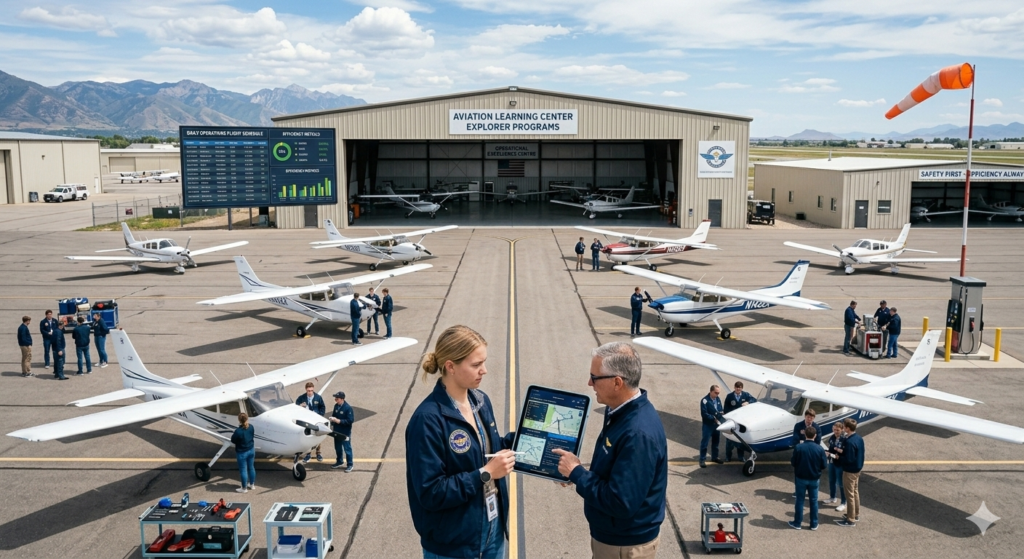
Imagine an airline where flights always depart on time, maintenance issues get fixed before they cause delays, and every team member spots problems before they escalate. Sounds like a dream, right? This isn’t fantasy—it’s the reality for organizations that have mastered aviation operational excellence. This powerful approach transforms good airlines into great ones, and today I will show you exactly how it works.
Whether you run an airline, manage an airport, or provide aviation services, achieving operational excellence should top your priority list. Let’s explore what it really means and how you can implement it starting tomorrow.
What Is Aviation Operational Excellence Really?
Operational excellence goes far beyond simple efficiency. According to GE Aerospace, operational excellence represents the “why” behind everything an aviation organization does. It’s not just about doing things right—it’s about creating a culture where excellence becomes instinctive and habitual.
Think of it this way:
- Operational effectiveness = doing the right things (the “what”)
- Operational efficiency = doing things right (the “how”)
- Operational excellence = the culture and purpose behind it all (the “why”)
When these three elements align, magic happens. Planes depart on time, passengers stay happy, and your bottom line thrives.
Why Your Organization Needs Operational Excellence Now
The aviation industry runs on thin margins. A single delay costs thousands, and one safety incident can damage your reputation for years. Here is why pursuing excellence makes business sense:
- Cost reduction through waste elimination and optimized processes
- Safety improvement by catching issues before they become incidents
- Customer satisfaction gains from reliable, on-time performance
- Competitive advantage that sets you apart from rivals
Operational excellence supports cost optimization ambitions while linking strongly into climate targets. You save money and protect the planet simultaneously.
Core Principles of Aviation Operational Excellence
Creating Self-Healing Processes
Here is a definition that might change how you think about operations: Operational excellence means each and every employee can see the flow of value to the customer and fix that flow before it breaks down.
This represents a fundamental shift. Instead of waiting for managers to solve problems, frontline employees spot issues early and correct them immediately. The process heals itself without executive intervention.
Making Flow Visible
Imagine walking through your facility and instantly knowing whether operations run on time. That is the goal. When manufacturers build moving assembly lines, everyone can see immediately if the plane stops moving. No questions needed—the visibility tells the whole story.
Building the Right Culture
Successful teams select members based on cultural fit first, technical skill second. Maverick from “Top Gun” should not join a high-performing team, no matter how technically competent. Your organization needs team players who prioritize collective success over individual glory.
Real-World Success Stories
Major Airline Cuts Maintenance Time by 33%
Working with industry partners, a major Middle Eastern carrier optimized their A-check maintenance process. A cross-functional team used continuous improvement methods to identify waste. They created dedicated tool kits, reorganized equipment storage, and ensured proper training. The result? They cut four hours off a 12-hour process—a 33% efficiency improvement.
LATAM Reduces Delays by 20%
LATAM Airlines implemented predictive technology across their fleet of over 300 aircraft. The system analyzes real-time data to predict failures before they happen. This proactive approach has already reduced technical delays and cancellations by 20%. Passengers get where they’re going on time, and the airline saves millions.
Ground Handler Cuts Incidents by 60%
A major ground handling company implemented AI-powered technology across their North American operations. The results stunned everyone. Within just 18 weeks, they achieved a 60% reduction in incidents and a 23% decrease in vehicle damage. Leadership stated that no other system has had such a profound impact on their safety culture in such a short period.
How to Implement Operational Excellence in Your Organization
Start with Genba
“Genba” means “the real place” where work happens. It is important to experience the process as it actually exists. Don’t sit in conference rooms analyzing reports. Go to the hangar floor, the baggage claim, the gate. Watch what really happens.
Map Your Value Stream
Create a visual representation of every step in your critical processes. Use sticky notes on a wall if you must. Teams that map their entire process immediately spot opportunities. You cannot fix what you cannot see.
Empower Frontline Employees
Your baggage handlers and mechanics see problems developing before anyone else. Give them authority to stop the line, fix issues, and suggest improvements. When employees fix flow without management intervention, you have achieved true excellence.
Use Data Strategically
Modern airports implement surface management systems that optimize gate assignments and aircraft turnaround times. These systems reduce taxi times, save fuel, and get passengers to their gates faster. Data turns guesswork into precision.
Key Performance Indicators to Track
| Metric | What It Measures | Why It Matters |
|---|---|---|
| On-Time Performance | Percentage of flights departing/arriving on schedule | Direct customer satisfaction impact |
| Turnaround Time | Minutes between arrival and departure | Efficiency of ground operations |
| Maintenance Delays | Cancellations due to technical issues | Reliability of fleet |
| Fuel Efficiency | Gallons per flight hour | Cost and environmental impact |
Common Pitfalls to Avoid
Treating It as a One-Time Project
Operational excellence is not a program with an end date. It is a continuous journey. Organizations that treat it as a temporary initiative see gains fade within months.
Ignoring Frontline Input
Your mechanics, ramp agents, and gate staff know more about actual operations than any executive. Ignoring their input guarantees failure. Listen actively and act on their suggestions.
Focusing Only on Cost
If you pursue excellence solely to cut costs, you will miss the bigger picture. Safety, quality, and employee engagement matter just as much. Balance all these elements for lasting success.
Frequently Asked Questions (FAQ)
What is aviation operational excellence exactly?
It is a management philosophy where every employee can see value flow and fix problems before they break. It combines effectiveness (doing right things), efficiency (doing things right), and culture (understanding why).
How does aviation operational excellence improve safety?
When processes run smoothly and employees spot issues early, safety incidents decrease dramatically. The Swissport example shows a 60% incident reduction through better visibility and empowered teams.
Can small aviation companies achieve operational excellence?
Absolutely. The principles scale to any size. Small operators often implement changes faster because they have fewer layers of bureaucracy. Start with value stream mapping and employee empowerment regardless of your size.
What technology supports aviation operational excellence?
Predictive maintenance systems, real-time data analytics, and surface management software all support excellence. However, technology alone won’t create it—you need the right culture first.
How long does it take to see results from operational excellence initiatives?
Some improvements happen immediately. The Etihad team cut four hours from their process right away. Cultural transformation takes longer, typically 12-24 months for full embedding.
Your Next Steps Toward Excellence
The path to aviation operational excellence starts with a single step. Walk out to your operation today. Watch what happens. Talk to your frontline employees. Ask them what slows them down and what they would fix if they could.
Small changes compound into massive results. The 33% maintenance time reduction, the 60% safety improvement, the 20% delay reduction—all started with someone deciding to do things differently.
Ready to transform your aviation operation? Contact our team today for a personalized operational excellence assessment. We will visit your facility, talk to your people, and deliver a roadmap to measurable improvement within 90 days. Your journey to excellence starts now.