
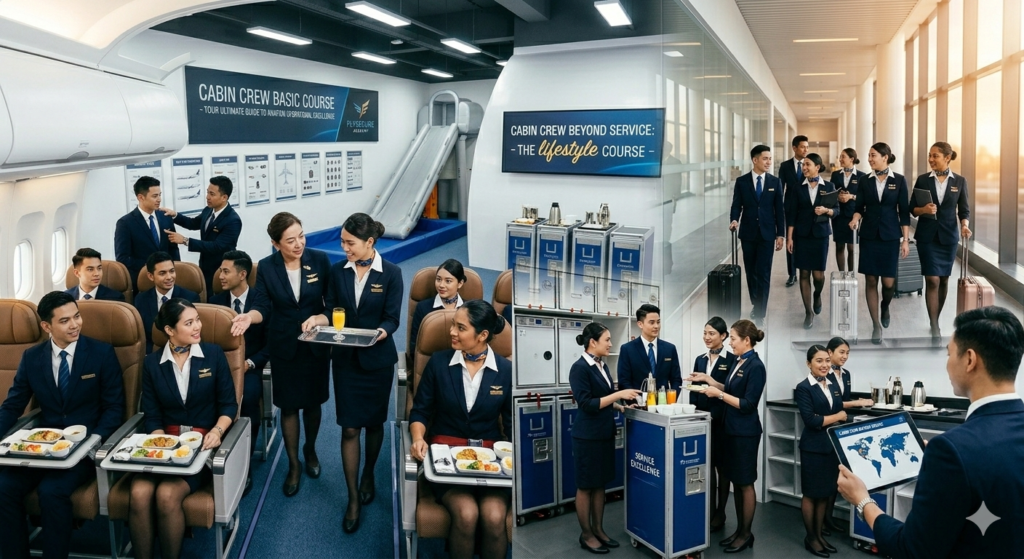
You’ve seen the photos. A crew member smiles against a sunset in Singapore. Another explores Tokyo’s neon streets during a 24-hour layover. It looks glamorous, effortless, magical.
But here’s what those photos don’t show: the 4 a.m. check-ins, the challenging passengers, the time zone fatigue, and the split-second emergency decisions.
Becoming flight crew isn’t just about learning safety drills. It’s about embracing an entirely new way of living. That’s exactly what a flight attendant lifestyle course prepares you for—not just the job, but the life that comes with it.
Let’s explore what this training really involves and why it might be your perfect career launchpad.
What Exactly Is a Flight Attendant Lifestyle Course?
Unlike basic safety training, a flight attendant lifestyle course dives deeper. It prepares you for the holistic experience of living and working in the skies.
Traditional cabin crew programs teach you how to serve meals and demonstrate safety procedures. Lifestyle courses go further. They address:
- Emotional resilience and stress management
- Work-life balance across multiple time zones
- Cultural intelligence for global travel
- Financial planning for irregular income
- Health and wellness strategies for frequent flying
Think of it as life preparation, not just job training.
Why Lifestyle Training Matters More Than You Think
Many aspiring crew members focus exclusively on the glamour. They imagine Paris cafes and Dubai shopping malls. But experienced flight attendants know the reality requires more preparation.
The Hidden Challenges of Cabin Life
Flight attendants face unique pressures. Constant time zone changes disrupt sleep patterns. Irregular meal times affect digestion and energy. Emotional labor—smiling through exhaustion—drains mental reserves.
Without preparation, these challenges overwhelm new crew members. Statistics show high turnover during the first year. Lifestyle training builds the resilience needed to thrive long-term.
What Airlines Look For
Recruiters seek candidates who understand the full picture. When you demonstrate awareness of lifestyle challenges during interviews, you stand out. You’re not just dreaming—you’re prepared. According to industry resources like the Flight Safety Foundation, well-prepared crew members contribute significantly to overall operational safety and passenger satisfaction.
Core Components of a Quality Lifestyle Course
Not all courses deliver equal value. Look for programs covering these essential areas.
Emotional Intelligence and Resilience
You’ll face angry passengers, homesickness, and high-pressure situations. Quality training teaches you to:
- Recognize emotional triggers before they escalate
- Maintain composure during conflicts
- Support colleagues facing difficulties
- Practice self-care without guilt
These skills protect your mental health throughout your career.
Cultural Intelligence
Every flight brings diverse passengers. Every layover introduces new cultures. Understanding cultural norms prevents misunderstandings and enriches experiences.
Top courses include modules on:
- Cross-cultural communication styles
- Religious and dietary sensitivities
- Regional customs and taboos
- Basic phrases in multiple languages
Financial Management
Flight attendant income fluctuates. Some months overflow with flights and per diems. Others bring reduced schedules. Lifestyle courses teach:
- Budgeting for variable income
- Maximizing per diem allowances
- Investing in retirement early
- Managing taxes across jurisdictions
Health and Wellness Strategies
Staying healthy while flying challenges even experienced crew. Your training should cover:
- Sleep optimization across time zones
- Nutrition strategies for irregular hours
- Exercise routines adaptable anywhere
- Immune system support during cold season
Career Progression Pathways
Finally, understand where this career leads. Quality courses map out:
- Promotion opportunities to purser or supervisor
- Specialized roles like trainer or safety coordinator
- Alternative careers leveraging your experience
- Networking strategies within the industry
What to Expect During Training
Lifestyle courses vary in format and duration. Here’s what typical programs include.
Course Structure
Most programs run between one and four weeks. Formats include:
- Intensive full-time boot camps
- Weekend courses for working students
- Online modules with practical components
- Blended learning combining digital and in-person
Choose based on your schedule and learning preferences.
Practical Components
Theory alone won’t prepare you. Look for hands-on elements like:
- Role-playing difficult passenger scenarios
- Practicing relaxation techniques
- Creating personal wellness plans
- Simulating layover experiences
Assessment and Certification
Quality programs assess your understanding through:
- Written examinations on key concepts
- Practical demonstrations of skills
- Personal reflection assignments
- Final projects applying course principles
Upon completion, you receive certification recognized by industry employers.
How to Choose the Right Course
With options proliferating, selection matters. Use these criteria.
Accreditation Matters
Verify the school holds recognition from aviation authorities or industry bodies. Accreditation ensures curriculum meets professional standards.
Instructor Experience
Research who teaches. Former flight attendants with years of experience bring invaluable insights. They share real stories, not just textbook theory.
Graduate Outcomes
Ask about alumni success. Quality programs track graduate employment rates and proudly share testimonials. If they hesitate, consider it a warning sign.
Value vs. Cost
Compare what’s included. Does the fee cover:
- All course materials
- Certification fees
- Job placement assistance
- Alumni networking access
Higher upfront cost sometimes delivers better long-term value.
Real Stories: How Lifestyle Training Transforms Careers
Consider Maria’s experience. She enrolled in a lifestyle course after failing two airline interviews. “I had the safety knowledge,” she explains. “But I couldn’t articulate how I’d handle the lifestyle demands.”
During training, she discovered her blind spots. She learned to discuss emotional resilience confidently. She developed a personal wellness protocol. At her next interview, she impressed recruiters with her preparation.
Now flying internationally for a major carrier, Maria credits lifestyle training for her success. “I’m not just surviving this career. I’m thriving in it.”
Frequently Asked Questions
Q: What is a flight attendant lifestyle course exactly?
A: It’s specialized training preparing you for the holistic experience of cabin crew life. Beyond safety procedures, it covers emotional resilience, cultural intelligence, financial planning, and health strategies for frequent flying.
Q: Do I need a lifestyle course before applying to airlines?
A: While not mandatory, lifestyle courses give you significant advantages. You’ll interview more confidently, transition more smoothly, and likely retain your position longer than unprepared colleagues.
Q: How long does a typical flight attendant lifestyle course take?
A: Most programs run one to four weeks, depending on intensity and format. Options include full-time boot camps, weekend courses, and online modules with practical components.
Q: Will a lifestyle course guarantee me a flight attendant job?
A: No course guarantees employment. However, quality programs significantly improve your preparedness, interview performance, and long-term career satisfaction.
Q: Can I take a lifestyle course online?
A: Yes, many reputable schools offer online options. Look for programs combining digital learning with practical components like role-playing scenarios and personal wellness planning.
Q: How much does a flight attendant lifestyle course cost?
A: Prices range from $500 to $2,500 depending on duration, format, and included services. Compare what’s covered—materials, certification, job assistance—when evaluating options.
Q: What’s the difference between basic safety training and lifestyle courses?
A: Safety training teaches technical skills like evacuation procedures and first aid. Lifestyle courses prepare you for the human side—emotional challenges, cultural adaptation, health management, and career longevity.
Conclusion: Your New Life Awaits
The flight attendant path offers extraordinary rewards. You’ll explore places others only dream about. You’ll form friendships spanning continents. You’ll grow personally and professionally in ways few careers match.
But the path also demands preparation. Those who thrive aren’t just lucky—they’re trained. A flight attendant lifestyle course provides exactly that foundation.
You’ve read the guide. You understand the investment. Now comes the exciting part—taking action.
[Explore our recommended lifestyle training programs today] and compare options matching your goals. Speak with admissions advisors. Request course outlines. Talk to graduates. Your first flight as a crew member starts not at the gate, but in the classroom.
The sky isn’t just your destination—it’s your future workplace. Let’s get you ready.