
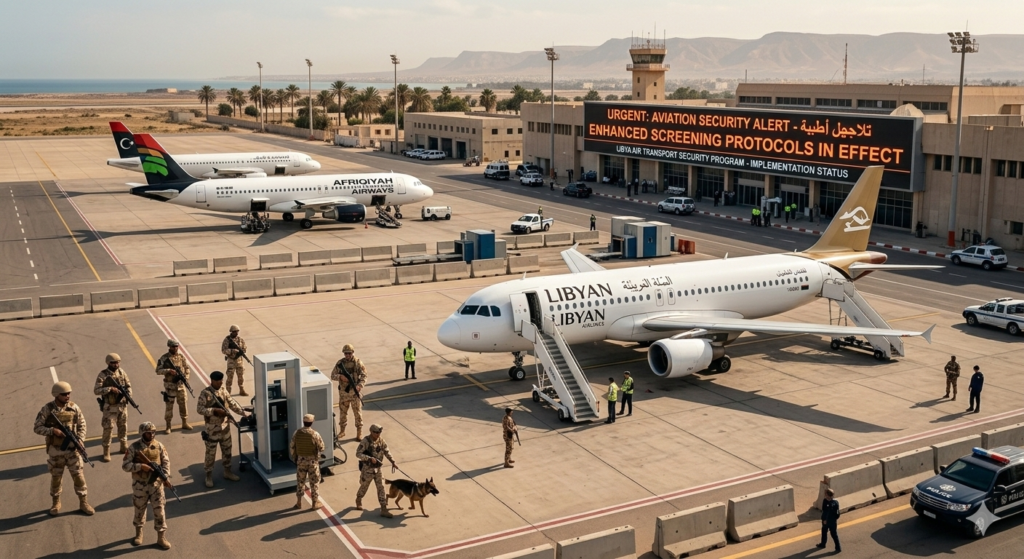
Picture this: You are sitting on a plane, finally cleared for takeoff from Tripoli. Suddenly, gunfire erupts near the runway. Armed groups clash just miles away, and your flight gets instantly grounded. This isn’t a movie scene—it happened just days ago at Mitiga International Airport. Welcome to the complex reality of aviation security in Libya, where protecting passengers requires navigating political turbulence as much as weather patterns.
If your organization operates in Libyan airspace, plans to restart flights, or provides security solutions in challenging environments, understanding this landscape isn’t optional. It is essential for survival. Today, we will explore the real threats, the players working to fix them, and how you can navigate this high-stakes environment safely.
The Current State of Aviation Security in Libya
Libya sits at a crossroads. After years of conflict, the country’s aviation sector struggles to rebuild while facing constant security pressure. The numbers tell a stark story. European naval operations recently recorded 65 suspicious flights in just one month, signaling persistent pressure on air traffic considered at risk.
Yet change is coming. International organizations and the Libyan Civil Aviation Authority work tirelessly to establish regulations that meet ICAO standards. Recent years have seen comprehensive updates to air navigation regulations covering everything from search and rescue to air traffic services. The framework exists. Implementation remains the challenge.
Why Aviation Security in Libya Matters Now
You might wonder why you should care about Libyan aviation security. Here is why:
- Regional stability depends on secure air transport
- Economic recovery requires functioning airports
- Humanitarian access needs reliable air corridors
- International travel demands confidence in safety
When Mitiga Airport temporarily suspended flights due to drone activity in January 2026, arriving planes diverted to Misrata, 180 kilometers away. Every disruption ripples outward, affecting passengers, cargo, and confidence.
Major Threats Facing Libyan Aviation Today
Armed Group Activity
The most immediate threat comes from powerful militias controlling key infrastructure. Recent clashes between rival forces killed people and forced complete closure of Tripoli’s only civilian airport. These groups control different parts of the capital, and when tensions rise, aviation suffers.
Some security forces control air bases directly, meaning airport operations depend on militia cooperation. This creates inherent vulnerability. Political disagreements translate directly into flight cancellations.
Drone Incursions
Unmanned aircraft pose a growing danger. In January 2026, authorities spotted a drone flying at altitudes where civilian aircraft operate. This forced immediate flight suspensions. Without robust counter-drone technology, such incidents will continue.
Suspicious Air Traffic
European monitoring operations track hundreds of suspect flights monthly. Between November and February, observed suspicious flights increased significantly, indicating constant pressure on air traffic. Not all these flights threaten aviation directly, but they complicate an already challenging security environment.
International Partners Stepping Up
US Support Programs
International security firms recently received grants to implement airport and aviation security programmes at multiple Libyan airports. The Bureau of Counterterrorism and Countering Violent Extremism funds these initiatives. According to program leaders, they will increase Libyan airports’ security capacity, monitor terrorist threats, screen against terrorist transit, and develop standard operating procedures to mitigate threats.
The urgency is clear. Given the centrality of Libya’s civilian airports to many recent conflicts and their vulnerability to terrorism, a clear and urgent need has emerged for innovative ideas to improve security consistent with international standards.
European Monitoring
The EU naval operation maintains constant surveillance, monitoring airports and runways across Libya. Their mandate extends forward, supporting UN arms embargo implementation while gathering intelligence on air traffic patterns.
Security Assessments
Aviation security companies now evaluate Libyan airport security directly. After recent workshops in Tripoli, delegations assessed major airports’ procedures against international standards. These evaluations will determine whether prior flight restriction advisories get revised, potentially allowing international airlines to resume operations.
Key Players in Libyan Aviation Security
| Organization | Role | Recent Activity |
|---|---|---|
| Libyan Civil Aviation Authority | Regulatory oversight | Updated air navigation regulations |
| EU Naval Operations | Airspace monitoring | Tracking suspicious flights |
| International Security Firms | Airport security upgrade | Implementing multi-airport security programs |
| Aviation Assessors | Security evaluations | Evaluating airport procedures |
The Legal Framework
Libya’s foundational aviation law dates to 2005 but incorporates international standards. The law establishes complete and exclusive sovereignty over Libyan airspace. It defines everything from aircraft registration requirements to security inspection authority.
Customs and security personnel can inspect aircraft, passengers, and cargo under this law, though inspections must not cause unreasonable delay. Authorities hold power to prevent aircraft from flying when necessary for monitoring implementation.
Recent regulations bring Libyan standards closer to ICAO requirements, covering air traffic services, meteorological services, and rules of the air. The foundation exists. Enforcement grows stronger.
Practical Steps for Organizations Operating in Libya
Conduct Thorough Risk Assessments
Before any flight operation, evaluate current conditions at your specific destination airports. Conditions change rapidly. What was safe last month may prove dangerous today.
Maintain Strong Local Partnerships
Work with ground handlers and security providers who understand local dynamics. International expertise matters, but local knowledge saves lives.
Stay Connected with International Monitoring
EU operation Irini and other monitoring bodies share valuable intelligence. Access these networks when possible. Information is your best defense.
Invest in Flexible Planning
Build contingency plans for every flight. Identify alternate airports, maintain fuel reserves, and prepare for last-minute diversions. Flexibility prevents crises.
Frequently Asked Questions (FAQ)
What is the current status of aviation security in Libya?
Aviation security in Libya faces significant challenges from armed group activity, drone incursions, and suspicious air traffic. However, international partners work actively with Libyan authorities to improve security infrastructure and procedures.
How can international airlines operate safely in Libya?
International airlines must conduct thorough risk assessments, maintain strong local security partnerships, and build flexible contingency plans. Staying connected with European monitoring operations provides valuable intelligence.
What international organizations support aviation security in Libya?
ICAO sets global standards that Libyan regulations now follow. EU naval operations monitor airspace continuously. International security firms implement ground security upgrades at major airports with US government funding.
Are Libyan airports safe for passenger travel?
Safety varies by airport and current political conditions. Major airports like Mitiga have suspended operations recently due to security incidents. Travelers should check current conditions and follow all official travel advisories before booking.
How does the political situation affect aviation security in Libya?
Political fragmentation directly impacts aviation security. Different armed groups control various airports and air bases. When political tensions rise, these groups clash, forcing immediate flight suspensions and creating dangerous conditions.
Your Path Forward in Libyan Aviation
The challenges facing aviation security in Libya are real and significant. Yet opportunities exist for organizations that approach this market with eyes wide open. International partnerships strengthen daily. Security infrastructure improves steadily. The framework for safe operations continues developing.
Whether you represent an airline considering route restoration, a security company offering solutions, or a humanitarian organization needing access, preparation determines success. Understand the threats. Know the players. Build robust partnerships.
Ready to navigate Libyan aviation safely? Contact our security advisory team today for a comprehensive risk assessment and customized operational plan. We maintain boots on the ground in Tripoli, relationships with key security forces, and real-time intelligence feeds from international monitoring networks. Your safe operations start with us.